Choosing a wall-mounted EV charger height is more practical than it first appears. The unit must remain reachable, protected, and comfortable during daily charging. A driver should connect the plug without bending deeply or stretching across the vehicle. The answer also depends on the car’s inlet position, cable length, wall structure, and local installation rules.
What is the best height for wall-mounted EV chargers? For many residential garages, installers commonly position the charger approximately 42 to 48 inches above the finished floor, measured to the connector or operating controls. This range keeps the screen visible and the cable manageable. It also reflects accessibility principles, although accessibility requirements can vary by location and project type. The U.S. Access Board generally identifies 15 to 48 inches as a usable forward-reach range. That guidance is helpful, not a universal residential installation rule.
Industry evidence supports careful planning. The International Energy Agency’s Global EV Outlook 2024 reported continued rapid growth in electric-car sales and charging demand, making convenient home charging increasingly important. The U.S. Department of Energy’s Alternative Fuels Data Center also emphasizes following equipment instructions, electrical requirements, and qualified installation practices. Manufacturer guidance remains decisive. Some chargers place controls near the top, while others use a low connector holster.
Small details matter. A thick cable can drag against the floor. A high wall may make winter charging uncomfortable. A low mounting point may invite impact from bicycles or tools. A single “perfect” height is tempting, but it is incomplete. Measure the actual vehicle, cable, and user reach before drilling. The best installation is usually the one that feels effortless on an ordinary evening, not merely the one that looks tidy.
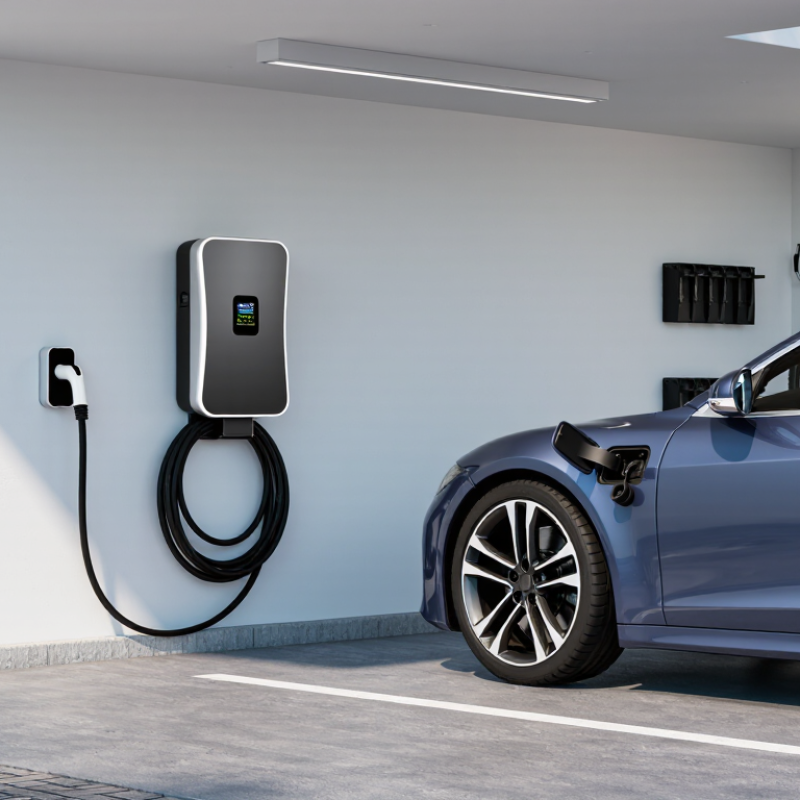
What Is the Best Height for Wall Mounted EV Chargers?
Mounting height strongly affects comfort, visibility, and daily charging reliability. A connector placed too high can strain shoulders, especially when the cable feels heavy. Too low, and the handle may scrape walls or collect dirt.
The U.S. Access Board’s 2010 ADA Standards identify a 15–48 inch forward-reach range for operable parts. This range offers a useful design reference, not a universal answer. For many homes, positioning the charger controls around 42–48 inches above the finished floor feels practical. The socket should remain easy to see beside a parked vehicle. Cable length, vehicle inlet position, driveway slope, and user mobility still matter more than a neat measurement.
Tips: Test the height with the cable connected. Stand beside the parked vehicle. Lift the handle naturally. Check whether the cable crosses a walking path. Leave enough space for gloves and poor lighting. The U.S. Department of Energy’s Alternative Fuels Data Center reported more than 180,000 public charging ports in 2024, showing how varied charging environments have become. A home setup should not copy a public station automatically. Wall structure matters too. A strong mounting surface reduces movement and connector stress. My own preference is slightly below shoulder level, but that choice can fail for shorter users. Measure twice, then reconsider who will use it most.
What Is the Best Height for Wall Mounted EV Chargers?
The best height depends on more than personal preference. It must suit the vehicle inlet, cable reach, wall structure, and user access. For many homes, positioning the charger controls about 42 to 48 inches above the finished floor works well. This height keeps the screen visible without forcing users to bend. It also reduces cable contact with the ground.
Vehicle inlet locations vary widely. A front-side port may need a shorter cable path than a rear-side port. Park the vehicle normally, then measure the cable’s natural curve. Avoid sharp bends near the connector. The International Energy Agency reported nearly 14 million electric car sales worldwide in 2023. That growth means residential installations increasingly serve different vehicle designs, not one standard layout.
Tips: Test the height with a paper template before drilling. Check the plug position, door swing, and drainage path. For public or shared parking, review accessibility requirements carefully. The U.S. Access Board commonly uses a 15-to-48-inch reach range for accessible controls, but local rules may differ. Keep the emergency shutoff or main controls visible and reachable. A lower mount may help wheelchair users, yet it can expose the unit to impact. A higher mount may protect it, but short users could struggle. I have found that “standard” heights are only starting points. The parking space decides more than the wall does.
For most home garages, mount a wall-mounted EV charger 48 to 54 inches above the finished floor. Measure to the center of the charger, not its lower edge. This height keeps the display visible and the connector easy to reach. It also reduces bending when plugging in. If shorter drivers use the garage, 42 to 48 inches may feel more natural. Test the position with a paper template first. A small adjustment matters.
Driveway installations need slightly different thinking. A height of 42 to 50 inches usually works well beside a parked vehicle. Keep the charger away from door swings, standing water, and areas where snow may pile up. The cable should reach the charging port without crossing a walking path. Outdoor walls may also require weather-rated equipment and careful electrical installation. Check local requirements before mounting anything. Rain changes everything.
In shared parking areas, 48 to 54 inches offers good visibility and discourages accidental contact. However, accessible spaces may require lower controls or a different reach range. Follow applicable accessibility guidance for the site. Leave enough clearance for wheelchairs, carts, and open vehicle doors. The common mistake is choosing height from the wall alone. Consider the car, cable, user, and ground surface together. A neat installation can still be awkward. I would rather measure twice than relocate a heavy charger later.
What Is the Best Height for Wall Mounted EV Chargers?
How to Measure and Position the Charger Before Installation
The best height depends on your vehicle, wall, parking angle, and cable length. A practical starting point is to place the charger controls about 1.2 to 1.5 metres above the finished floor. This usually keeps the display visible without forcing users to bend or stretch. Measure from the final driveway or garage floor, not from unfinished ground. Small changes matter.
Park your vehicle exactly where it normally sits. Mark the charging port location on the wall with tape. Then hold the cable in a gentle curve toward that mark. It should reach without crossing a walkway, scraping the vehicle, or hanging near moving doors. Check the connector holster too. It needs enough space for one-handed removal and secure storage. A cardboard template helps reveal awkward positions before drilling. Use a spirit level, and confirm the wall can support the equipment. A qualified electrician should verify the mounting surface, cable route, electrical protection, and local installation requirements.
Do not position the unit directly beside a door hinge, water outlet, or low corner. Heat, rain, and accidental impact can shorten its service life. The first measurement is rarely perfect. Recheck it after opening the vehicle door and charging flap. That extra minute may expose a cable bend or reach problem that looked fine on paper. Follow the installation manual because recommended clearances can differ between charger designs.
Use the charger’s main display, buttons, or connector holder as the measuring reference. The chart shows practical height points above the finished floor, based on accessibility reach limits and common residential installation practice.
For a mixed household, placing the charger controls around 42–48 inches (107–122 cm) above the finished floor is generally practical. Keep the lowest operable part at least 15 inches (38 cm) above the floor where accessibility requirements apply. Measure from the final floor surface, check cable reach, avoid door and vehicle-impact zones, and confirm local electrical and accessibility rules before installation.
Reference: 2010 ADA Standards for Accessible Design, Section 308 reach ranges. Dimensions are shown in both inches and centimeters.
What Is the Best Height for Wall Mounted EV Chargers?
The best mounting height balances accessibility, cable reach, safety, and local code requirements. In many residential installations, the charger controls sit about 42 to 48 inches above the finished floor. This range usually works for standing users and many wheelchair users. However, a fixed number is not suitable for every garage.
Check the reach distance from the parking position. A cable should reach the vehicle inlet without stretching across a walkway or dragging over sharp edges. Mount the cable holster where it can be lifted comfortably, often between 36 and 48 inches high. Keep the connector away from floor puddles, tire paths, and likely impact points. Small details matter.
Local electrical rules may specify clearances, outdoor protection, mounting strength, or accessibility limits. A licensed electrician should confirm the applicable code before drilling. Wall material also changes the recommendation. A concrete wall may support a different bracket position than a thin framed wall. In shared or accessible parking areas, the control screen and connector may need to remain within a defined reach range.
Do not treat 48 inches as a universal answer. It is only a starting point. Measure with the vehicle parked, then test the cable by hand. A charger can be technically secure yet awkward to use. That is an easy mistake to miss. Weather exposure, door swing, and future vehicle changes deserve another look before final installation.
| Design Dimension | Practical Planning Range | Why It Matters | Installation Verification |
|---|---|---|---|
| Charger body height | 42–48 in (107–122 cm) above the finished floor or walking surface | This range usually places status indicators, buttons, and the cable holder within comfortable standing and seated reach while keeping the unit clear of common impact zones. | Measure to the center of the charger body and confirm that the selected location does not conflict with the vehicle, garage door, shelving, or other equipment. |
| Highest frequently used control | Preferably no higher than 48 in (122 cm) | The 48-inch height is a useful accessibility planning benchmark for operable controls. Accessibility rules may differ depending on whether the installation is residential, commercial, public, or part of an accessible parking space. | Review the applicable accessibility standard and local building requirements before finalizing the mounting height. |
| Lowest part of the charger | At least 36 in (91 cm) above the finished floor where practical | A raised installation helps reduce exposure to standing water, snow, dirt, impact from equipment, and accidental contact with the lower enclosure. | Follow the equipment installation instructions and any required minimum height for the location, flood zone, or outdoor enclosure. |
| Connector holster height | Approximately 36–48 in (91–122 cm) | The connector should be easy to remove and return without lifting the cable excessively. A lower holster can improve access for shorter users and many seated users. | Test the holster with the cable attached and ensure the connector cannot rest on the ground or become a trip hazard. |
| Cable reach to the vehicle inlet | Use a cable long enough to reach the inlet without stretching; 18–25 ft (5.5–7.6 m) is common for many residential layouts | The required length depends on the parking position, inlet location, charger position, and the route around the vehicle. A cable that is too short can pull on the connector; one that is excessively long can create loops and trip risks. | Park every intended vehicle in its normal position and test the cable path, including front, rear, and side inlet locations where applicable. |
| Cable clearance from the floor | Keep the cable and connector off the floor when stored; avoid loose loops across walkways | Keeping the cable elevated reduces abrasion, contamination, water exposure, and trip hazards. The cable should not be pinched by a door or vehicle tire. | Install the manufacturer-specified cable-management hardware and maintain a clear walking route. |
| Side and front working clearance | Leave enough space to operate the connector with one hand and avoid adjacent obstructions | A charger mounted too close to a corner, door, post, or vehicle body can make the connector difficult to remove and can force the cable into a sharp bend. | Check the charger with the garage door, pedestrian door, vehicle doors, and storage cabinets fully open. |
| Cable bend and connector strain | Use smooth curves; never exceed the cable’s specified bend radius | Sharp bends and continuous pulling can damage the cable jacket, connector, or terminals. The cable should hang naturally rather than support the charger or connector weight. | Follow the equipment manual for bend radius, strain relief, and cable-management requirements. |
| Outdoor and wet-location exposure | Mount above likely splash, snow, and drainage areas; use equipment listed for the environment | Mounting height alone does not make an installation weatherproof. Outdoor equipment, covers, fittings, and wiring methods must be suitable for wet locations where required. | Confirm the enclosure rating, conduit fittings, drainage conditions, and local electrical requirements with a qualified installer. |
| Electrical disconnect and overcurrent protection | Install as required by the applicable electrical code and equipment instructions | EV charging equipment is a continuous electrical load in many installations. Circuit rating, conductor sizing, grounding, ground-fault protection, and disconnect provisions depend on the system and jurisdiction. | Have the circuit designed and inspected according to the locally adopted electrical code; do not determine compliance from mounting height alone. |
| Accessible parking or public-use installation | Apply the stricter accessible-route, reach-range, clearance, signage, and parking-space requirements where applicable | Public and commercial charging stations may be subject to accessibility rules that do not apply in the same way to a private single-family garage. | Coordinate with the authority having jurisdiction before construction, especially for accessible spaces or publicly available equipment. |
| Final recommended target | Mount the charger controls near 48 in (122 cm), with the holster around 36–48 in (91–122 cm) | This configuration balances reach, visibility, cable handling, vehicle clearance, and protection from common residential hazards. | Treat these values as planning guidance, not a universal legal requirement. Local code, site conditions, and the equipment manual take precedence. |
Important: There is no single universal mounting height for every wall-mounted EV charger. Confirm the final location with the equipment instructions, the locally adopted electrical and building codes, accessibility requirements where applicable, and the authority having jurisdiction.
Many homes use 42 to 48 inches from the finished floor to the controls. This keeps the screen visible and reduces bending. It is only a starting point.
Measure to the charger’s center, not its lower edge. Garage installations often place the center around 48 to 54 inches high. A small adjustment can improve daily use.
Park the vehicle normally and observe the cable’s natural curve. Front and rear inlets create different cable paths. Avoid sharp bends near the connector.
A height between 42 and 50 inches often works beside a parked vehicle. Keep the charger away from door swings, puddles, and snow piles. Rain changes everything.
Cut a paper template matching the charger’s size. Place it on the wall and test the plug position. Open the vehicle door and walk around it. This simple test can reveal awkward reach.
Lower controls may improve access, often within a 15-to-48-inch reach range. Local accessibility requirements may differ. A lower position can also face more impact risk.
A cable holster often works between 36 and 48 inches above the floor. Keep the connector away from puddles, tire paths, and sharp edges. It should lift comfortably without stretching.
Check wall strength, electrical clearances, weather protection, and the walking path. Keep emergency controls visible and reachable. Confirm local requirements with a licensed electrician before drilling.
Yes. Uneven ground, drainage, snow, and standing water can change the practical height. The vehicle, user, cable, and surface must be considered together. The wall alone is not enough.
No. It may suit many installations, but vehicle design and user height vary. I once treated standard measurements as final. That was too simple.
What is the best height for wall-mounted EV chargers? The ideal position balances comfortable access, safe cable handling, and practical vehicle charging. In most installations, the charger should be mounted high enough to stay clear of water, dirt, and accidental impact, yet low enough for users to reach the controls and plug without stretching. The best height may vary depending on the user’s mobility, the vehicle’s charging-port location, the cable length, and whether the charger is installed in a garage, driveway, or shared parking area.
Before installation, measure the available wall space, vehicle parking position, and cable reach to identify a convenient mounting point. Avoid locations where the cable could become a trip hazard or be pinched by doors and vehicles. Garages may allow a more flexible position, while outdoor areas require additional attention to weather exposure and clearance. Accessibility needs, local electrical codes, wall strength, and professional installation requirements should also be considered to ensure the charger is secure, safe, and easy to use.

VoltNode Charger